

What We Stand For
Building stronger urban communities through women-led action.
The Akhter Hameed Khan Foundation (AHKF) works with low-income urban communities in Pakistan to reduce poverty through women-centered, community-designed solutions. Grounded in the legacy of Dr. Akhter Hameed Khan, founder Orangi Pilot Project, we connect health, livelihoods, digital capability, housing, sanitation, water and climate resilience so families can move from survival to stronger, healthier and more dignified urban lives.

How We Work
Our Theory of Change.
Urban poverty is multidimensional. Poor health, unsafe housing, informal or weak incomes, poor sanitation, digital exclusion and climate risk reinforce each other. AHKF’s theory of change is that when women, households and local communities are co-owners and gain trusted access to services, skills, finance, data and collective voice, they can improve their own wellbeing and influence stronger urban systems.
Our Model
Addressing Urban Poverty
AHKF works at household, lane and settlement levels. We begin with community trust, mapping and diagnostics, then co-design practical solutions with women, local leaders and institutions. Our methodology combines outreach using Aapis and Rahbars, digital data, referral systems, enterprise pathways, local partnerships, Dashboards and continuous learning to test what works and adapt it for scale.
Our Partners





Our Areas of Expertise

Primary Health Care
AHKF strengthens primary health care by bringing prevention, counseling, screening and referrals closer to underserved households. Through trained Aapis, we support maternal and child health, family planning, nutrition, immunization, hypertension and diabetes screening, and referral follow-up. Our model reduces access barriers by combining community trust, digital tools, provider linkages and repeated household contact.
Explore
Women's Enterprise & Financial Inclusion
AHKF sees women’s enterprise as a pathway to income, agency and household resilience. We identify low-income women entrepreneurs, strengthen their business skills, improve digital and financial capability, and connect them to markets, credit and mentoring. Our approach works with real constraints: mobility, family permission, informal work, weak networks and limited access to capital.
Explore
Digital Literacy & Future Skills
AHKF treats digital education as a practical capability for work, enterprise, learning and inclusion. We support women, youth and community workers to use digital tools safely and productively for business, service access, financial inclusion, data collection and employability. Digital learning is not a standalone activity; it is an enabler of economic and social mobility.
Explore
Urban Upgrading: Housing, Sanitation & Climate
AHKF’s urban upgrading work focuses on safer homes, cleaner lanes and more resilient settlements. We support community-led planning around housing improvements, sanitation, drainage, water, waste and climate adaptation. The model combines mapping, technical advice, lane-level mobilization, women’s participation, local masons, affordable finance pathways and partnerships with municipal and technical institutions.
Explore
Our Data Hub
The Urban Impact Lab
Urban Impact Lab (UIL) is AHKF and RADS’ shared field innovation platform in Orangi, Karachi(2022) and Dhoke Hassu, Rawalpindi (2016). Across dense informal settlements, UIL combines population mapping, Google Buildings data, Plus Codes, small area estimates and service catchment analysis to identify who lives where, which households are missed, and how far people are from health, education, water, sanitation and livelihood services. AHKF then tests last-mile models through Aapis, community groups, dashboards and local partners, turning mapping into practical coverage plans, referral systems, upgrading pilots and policy-relevant evidence for urban poverty reduction.
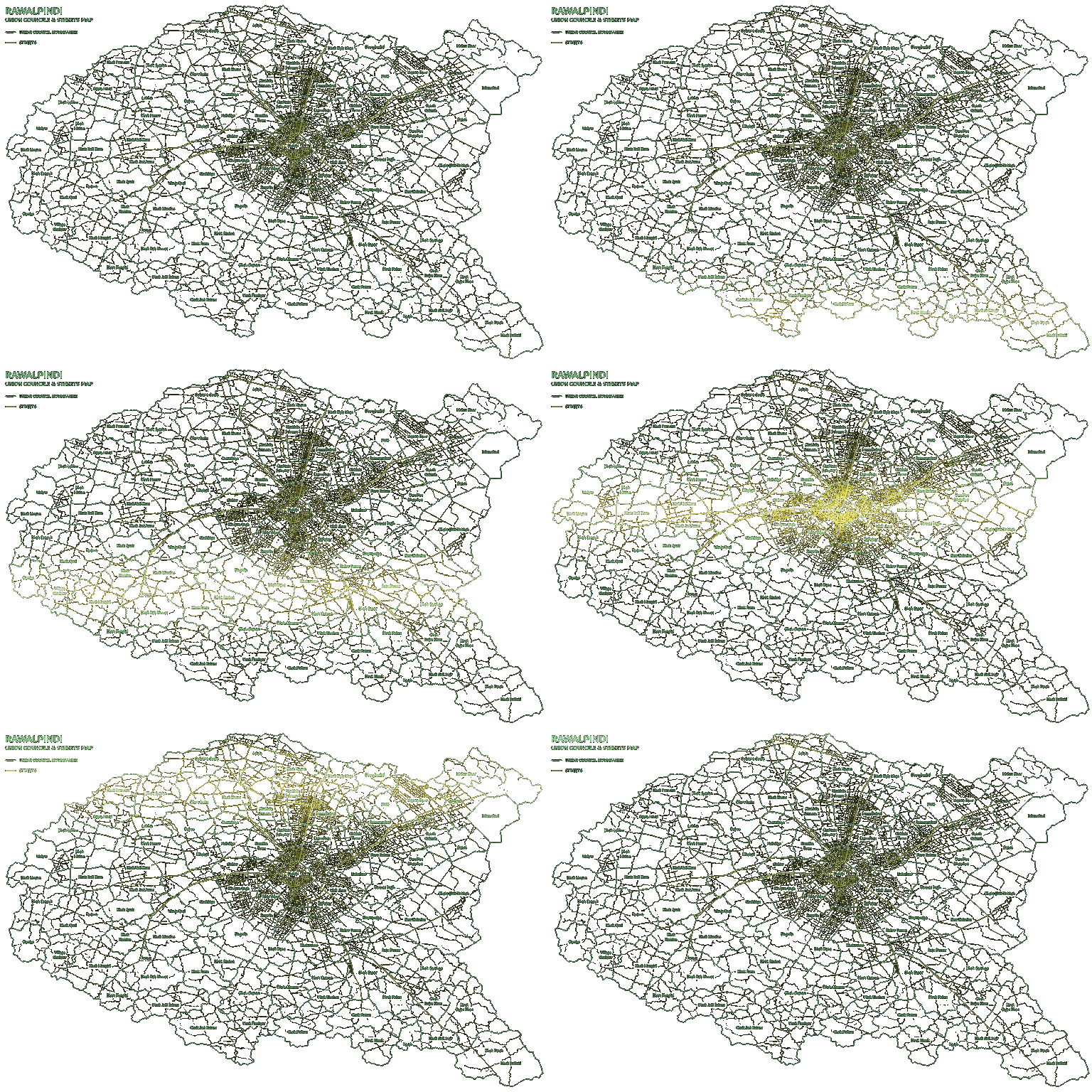
Rawalpindi.
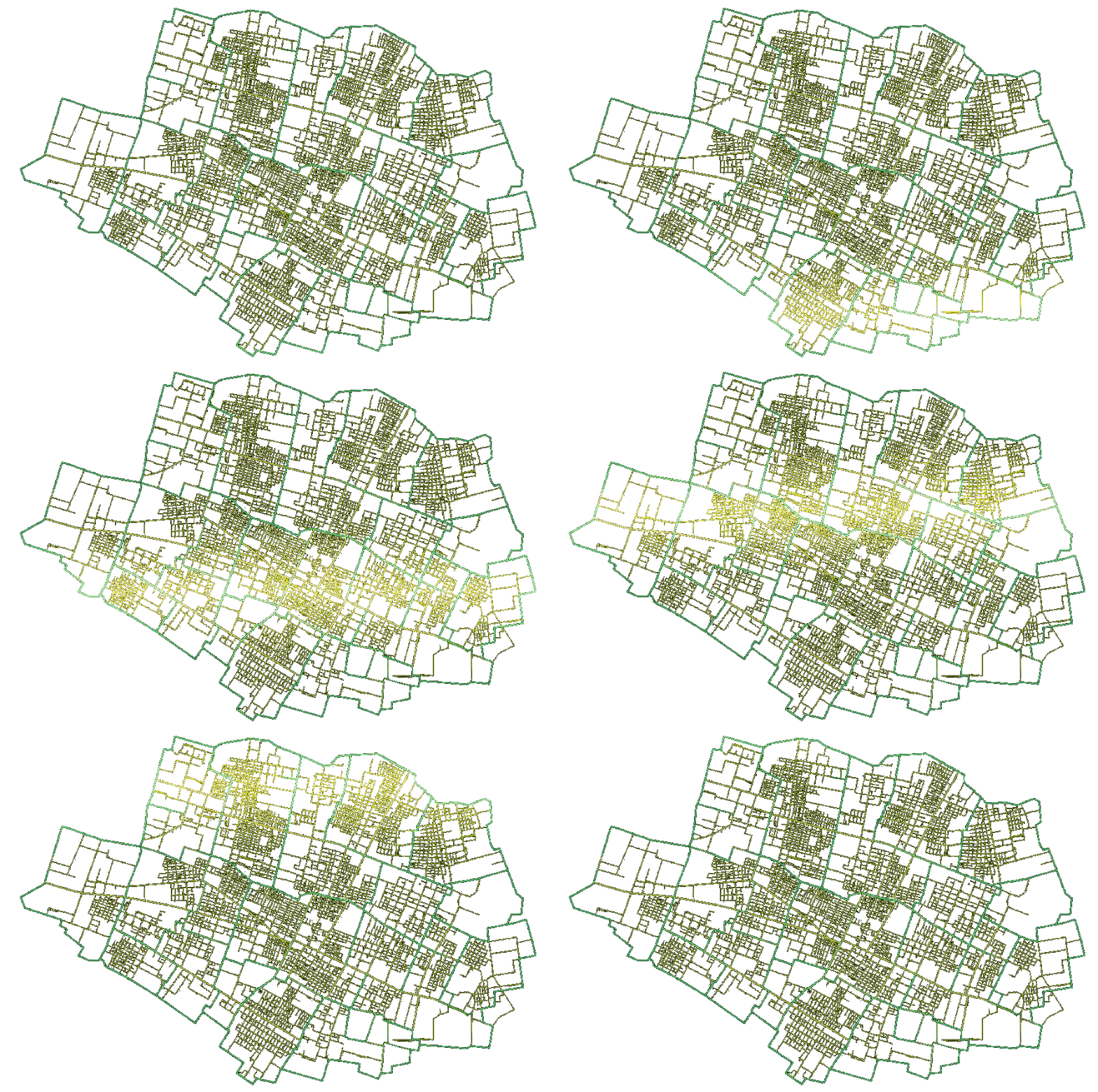
Orangi Town.
From Our
Inspiration
“Pakistan’s development will not come from the top, it
will come from the bottom by the people, and it will
happen in pockets.
One island here, one there, and you will form
one island of hope”
-Dr Akhter Hameed Khan
Connect With Us
We’re here to answer your questions and collaborate for a better tomorrow.